
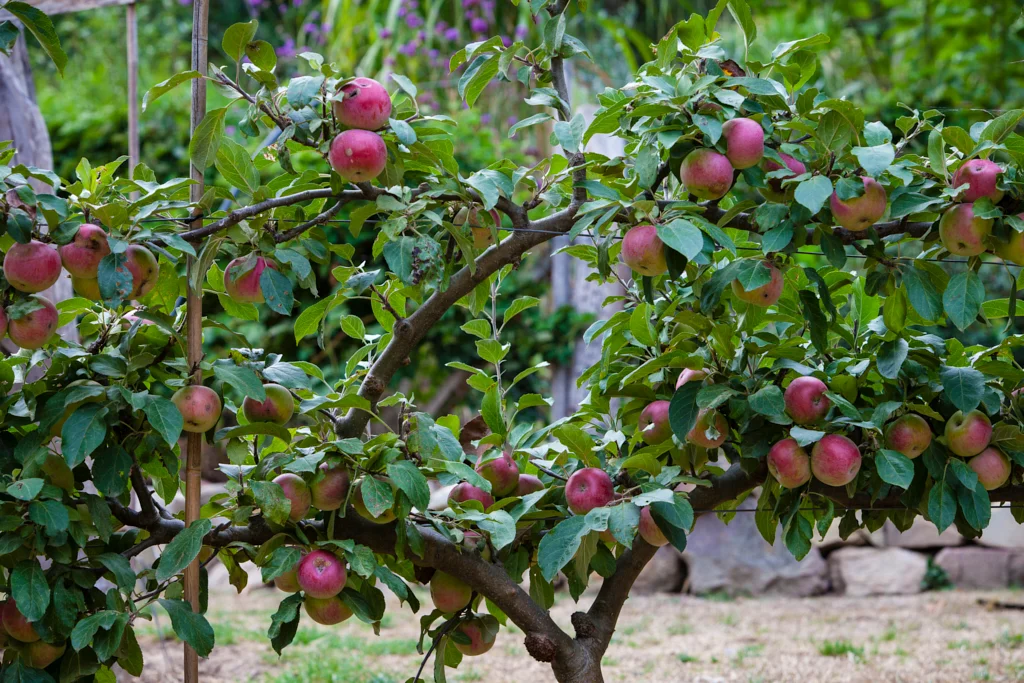
This method of training trees, espalier training, to grow flat against a wall or fence not only maximizes limited space but also creates a microclimate that encourages ripening, allowing gardeners in cooler northern regions to successfully grow varieties that might otherwise struggle. While the geometric precision of a mature espalier can appear daunting to the uninitiated, the process relies on a series of logical, manageable actions that anyone with patience and a pair of sharp secateurs can master.
Success begins with understanding that an espalier is not merely a tree but a living sculpture that requires a partnership between the gardener and the plant. The architectural beauty of horizontal tiers laden with blossom in spring and fruit in autumn provides a dual-purpose feature that few other garden elements can match. Before you rush to buy fruit trees for this purpose, it is essential to recognise that the journey from a young whip to a fully formed tiered structure is a marathon rather than a sprint, typically requiring three to four years of structural training followed by annual maintenance.
The specialists at CRJ Fruit-Trees, a nursery renowned for their extensive selection of heritage and modern varieties, emphasise the importance of starting with the right material. They advise that selecting young, pliable trees is the foundation of success in any training endeavour. A spokesperson for the nursery notes that “success with restricted forms relies heavily on patience and choosing the correct rootstock for your specific soil conditions, as a tree on a vigorous rootstock will fight the restriction and produce wood rather than fruit, while espalier apple trees on semi-dwarfing stocks generally offer the perfect balance of growth and manageability for most garden walls.”
Assessing Your Canvas and Orientation
The first step in establishing a successful espalier is a thorough assessment of the location where the tree will live for the next several decades. Unlike freestanding trees which can grow towards the light, an espalier is fixed in a two-dimensional plane, making the aspect of your wall or fence the single most critical factor in your planning. A south-facing wall is the gold standard for most fruit, particularly for dessert apples and pears that require ample sun to develop their sugar content and complex flavours. However, a west-facing wall is often equally suitable and can sometimes be preferable in areas prone to late frosts, as it allows the tree to warm up more gradually in the morning, reducing the risk of damage to delicate blossoms.
You must also consider the material of the support structure itself. Brick and stone walls act as storage heaters, absorbing warmth during the day and releasing it at night, which can effectively extend the growing season and protect blossoms during cold snaps. If you intend to train your tree against a wooden fence, ensure that the fence panels are sturdy and well-secured to concrete posts, as a mature apple tree laden with fruit can weigh a significant amount. A common mistake is planting too close to the backing structure, which results in dry roots because the wall creates a rain shadow. You should plan to plant the tree at least six to nine inches away from the masonry or timber, leaning the young stem gently towards the support, to allow the roots to access natural rainfall while still benefiting from the radiant heat.
Selecting the Correct Rootstock and Variety
The choice of rootstock is the invisible engine that drives the growth of your espalier and determining this is arguably more important than the variety of fruit itself. In the United Kingdom, apple trees are typically grafted onto rootstocks that control their size and vigour. For an espalier, you require a rootstock that provides enough energy to heal pruning wounds and produce fruit spurs, but not so much vigour that the tree becomes an unruly tangle of vertical growth that demands constant cutting. For most average-sized garden walls, the MM106 rootstock is the ideal candidate for apples, offering moderate vigour that suits the espalier form perfectly. If you are working with a very low wall or a particularly fertile soil, the slightly more dwarfing M26 might be appropriate, though it can sometimes lack the strength to fill out the top tiers in poorer soils.
When it comes to variety selection, you must consider pollination groups and spur-bearing habits. Espalier training relies on the formation of permanent fruiting spurs along the horizontal arms. Therefore, you must avoid tip-bearing varieties, which produce fruit at the ends of long shoots, as the necessary pruning to maintain the espalier shape would remove the majority of your potential harvest. Spur-bearing varieties such as the reliable ‘Scrumptious’, the classic ‘Cox’s Orange Pippin’, or the disease-resistant ‘Red Windsor’ are excellent choices. Pears also respond magnificently to espalier training, with varieties like ‘Conference’ and ‘Doyenné du Comice’ being traditional favourites. Ensure that if you are planting a single tree, you choose a self-fertile variety, or check that there are compatible pollinators in your neighbourhood to ensure a good crop.
Installing the Support Infrastructure
Before a single spade of soil is turned, the support system must be installed with precision and durability in mind. Attempting to retrofit wires behind a growing tree is a recipe for frustration and damaged branches, so this infrastructure should be considered permanent. The standard method involves a series of horizontal wires stretched taut between vine eyes or heavy-duty eye bolts secured into the wall or fence posts. These wires act as the template for your tree, so using a spirit level during installation is non-negotiable to ensure your tiers are perfectly horizontal. A crooked wire will result in a crooked tree, which can disrupt the flow of sap and lead to uneven growth where one side of the espalier dominates the other.
The spacing of these wires dictates the architecture of the tree. The first wire should typically be positioned around fifteen to eighteen inches from the ground, with subsequent wires spaced equally at fifteen to eighteen-inch intervals above it. Three or four tiers are standard for a six-foot fence, but you can go higher on a tall house wall. Use high-quality galvanised steel wire, ideally around two millimetres thick, as it will need to bear the weight of heavy branches for many years without sagging. Incorporating a turnbuckle or tensioner at one end of each wire is a professional touch that allows you to tighten the system as the wires inevitably stretch over time or in hot weather. This framework is the skeleton of your espalier, and its strength ensures the tree remains safe during winter gales.
Planting and the Initial Cut
With your location prepared and wires tensioned, the planting process can begin. The ideal time to plant is during the dormant season, between November and March, provided the ground is not frozen or waterlogged. Prepare a square hole that is significantly wider than the root system of your tree but no deeper. It is vital to break up the sides of the hole with a fork to prevent a glazed pot effect that can hinder root establishment. Incorporate well-rotted organic matter into the backfill soil to improve structure and moisture retention, but avoid adding excessive fertiliser at this stage, as this can burn young roots. When you buy fruit trees for training, you are often looking for a ‘maiden whip’, which is a one-year-old tree with no side branches, or a tree that has already been partly trained.
Planting depth is critical; the graft union, which is the knobbly join where the variety meets the rootstock, must remain above the soil level to prevent the variety from rooting itself and bypassing the size-controlling influence of the rootstock. Once the tree is planted and the soil firmed gently but thoroughly, the most daunting step follows: the initial prune. If you are starting with a maiden whip, you must cut the main stem cleanly just above the first wire, ensuring there are three good buds below the cut. The top bud will provide the new vertical leader, while the two buds below it will grow out to form the first pair of horizontal arms. This drastic cut requires courage, as you are removing a significant portion of your new purchase, but it is the physiological trigger that forces the tree to break dormancy exactly where you need the growth to occur.
Training the First Tiers
As spring arrives and growth accelerates, the training process begins in earnest. The buds you selected during the winter prune will erupt into young shoots. You must gently guide the top shoot vertically, tying it to a bamboo cane attached to the wires to keep it straight. The two side shoots should be allowed to grow at a roughly forty-five-degree angle initially, rather than forcing them immediately to the horizontal. Tying them down too flat too early can reduce their vigour, causing them to stall while the central leader races away. By keeping them elevated, you encourage strong growth that is balanced with the vertical stem.
Once these side branches have reached the desired length later in the summer, usually by August, you can gently lower them to the horizontal wire and tie them in with soft twine or flexi-tie. It is crucial to use materials that will not cut into the expanding bark. The vertical leader is then allowed to grow until it reaches the height of the second wire. In the following winter, the process is repeated: the vertical leader is cut again just above the second wire, stimulating the growth of the next tier of arms and a new leader. This cycle repeats annually until the desired number of tiers is achieved. Symmetry is the goal, so if one arm is growing more vigorously than its partner, you can depress the strong arm slightly to slow it down or elevate the weak arm to encourage it, balancing the flow of sap across the tree.
The Art of Summer Pruning
Once the structure of your espalier is established, the pruning regime shifts from structural training to fruit production. Unlike standard orchard trees which are primarily pruned in winter, espaliers and restricted forms rely heavily on summer pruning to maintain their shape and encourage flowering. Winter pruning stimulates vigorous vegetative growth, which is the opposite of what you want on a restricted form that has filled its space. Summer pruning, conversely, restricts growth and shocks the tree into producing fruit buds for the following year. It also allows light to penetrate the ripening fruit, improving colour and flavour.
The method, often adapted from the classic Lorette system, involves shortening the new growth that sprouts from the horizontal arms. In late summer, typically around mid-August for apples and slightly earlier for pears, look for the new shoots that have hardened and turned woody at the base. You should cut these side shoots back to three leaves above the basal cluster. Any shoots growing from those side shoots should be cut back to one leaf. This repetitive shortening keeps the tree compact and directs the tree’s energy into the spurs, which will swell and become the site of next spring’s blossom. The main leader and the tips of the horizontal arms should be left unpruned in summer if they have not yet reached their full intended length. This annual ritual is meditative and satisfying, revealing the clean lines of the tree and exposing the developing fruit to the autumn sun.
Ongoing Maintenance and Pest Control
Long-term care involves more than just pruning; it requires a holistic approach to the health of the soil and the ecosystem around the tree. Espaliers, because they are often planted against walls where rain shadow is an issue, require vigilant watering, especially during dry spells in summer. A young tree can fail rapidly if the soil dries out, and even a mature tree will drop its fruit prematurely if it suffers from drought stress. Mulching with well-rotted manure or garden compost in early spring helps retain moisture and provides a slow-release feed. A general-purpose granular fertiliser applied in late winter can also help maintain vigour, particularly for trees on dwarfing rootstocks which have smaller root systems.
Pest and disease management is generally easier on espaliers than on large bush trees simply because every leaf and fruit is accessible and visible. You can spot aphids or woolly aphids early and rub them off by hand or use a jet of water to dislodge them. Codling moth traps can be hung discreetly on the wires to monitor populations. The open structure of an espalier provides excellent airflow, which significantly reduces the risk of fungal diseases like scab and mildew that thrive in the stagnant air of a dense canopy. However, you should inspect the ties annually to ensure they are not strangling the thickening branches, loosening them as necessary to prevent canker from entering through constriction wounds.
Expanding Your Collection and Final Thoughts
Once you have mastered the training of a single espalier, the temptation to expand the collection is often irresistible. The linear nature of these trees means you can fit several varieties along a fence line where only one standard tree would fit. This allows for a succession of fruit, planting an early season variety like ‘Discovery’ alongside a late keeper like ‘Braeburn’. You might also experiment with interplanting fan-trained stone fruits, such as plums or cherries, which require a slightly different fan shape but complement the horizontal lines of the apple and pear espaliers beautifully.
The creation of an espalier is a testament to the gardener’s foresight and dedication. It is a project that yields results incrementally, teaching the value of consistency and care. There is a profound satisfaction in harvesting a crisp, sun-warmed apple from a tree that you have guided from a single stem into a complex, productive structure. Whether you have a sprawling country garden or a modest urban courtyard, the espalier offers a way to engage with nature that is both disciplined and deeply rewarding, proving that even in the smallest of spaces, one can cultivate abundance.
